An integral part of my teaching practise has always consisted of the Greek conception of education which is encapsulated in the term paideia, the ideal model in education according to the ancient Greeks. This timeless and universal ideal of paideia embodied in each student, is the cornerstone of the revival of Classical education.
Paideia from the Greek pais (child), paidos, paideuein ( to educate, discipline, guide, train a child). (Greek παιδεία, paideía).Those Greek words are also related to ‘propaedeutic,’ ( providing instruction), paideutikos,pertaining to teaching and pedagogy, and paediatrics.
These educational ideals of Paideia later spread to the Greco-Roman world and were translated as humanitas and equated to the ‘artes liberals’ (refer to subjects considered worthy of a free person so he or she could actively participate in civic life.) with the ‘studia humanitatis’. (studies of humanities). It was many centuries later when this became the seven liberal arts which we know today as the trivium (grammar, dialectic or logic, and rhetoric) and the quadrivium (mathematics, geometry, music, and astronomy ).
The concept of Paideia is a fundamental principle to Greek thought and its primary element in forming ethos and culture in society. The early Greeks believed that Paideia did not only form the building blocks of a culture, but they believed that true freedom could only be achieved through paideia education. During that time in history the city-state and the citizens had a reciprocal relationship both striving to achieve arete or moral excellence. The goal was to develop the mind body and heart harmoniously uniting morality intellect and beauty. The virtuous principles in the paideia system shaped people in accordance with a standard that held universal principles which did not change with time.
In conforming to the ideals of paideia the Greeks understood that educating man into his true form, the real and genuine human nature according to Plato, was the greatest work of all and paideia was the means of shaping human nature in accordance with the ideal. Pedagogy involved gymnastics, grammar, rhetoric, poetry, music, mathematics, geography, natural history, astronomy and the physical sciences, history of society and ethics, and philosophy—the complete pedagogical course of study necessary to produce a well-rounded, fully educated citizen.”—Richard Tarnas, The Passion of the Western Mind, pp. 29-30.
Paideia was instrumental in perpetuating ethos and culture from one generation to the next living virtuously in accordance with our rational human nature. According to Aristotle, eudaimonia or human flourishing was achieved through living virtuously with our human nature as rational human beings striving to express our full potential.
Thus education according to Werner Jaeger a classicist, paideia is ‘the process of educating man into his true form, the real and genuine human nature.” Werner Jaeger: Paideia: The ideals of Greek culture Vol. I: Archaic Greece, the mind of Athens, p. XXIII, third edition, Oxford 1946).
A response to the ideals of paideia in the twentieth century is evident in Mortimer J Adler’s revised classical education model which advocates for the Great books as seen in the Paideia Proposal. Adler believed that cultivating virtue and appreciating truth, goodness and beauty nourished the soul therefore this should be the priority of education.
Paideia, the formation and shaping of the character, aims to achieve moral virtue and intellectual wisdom by cultivating and nourishing the ‘true’ nature of the whole person.
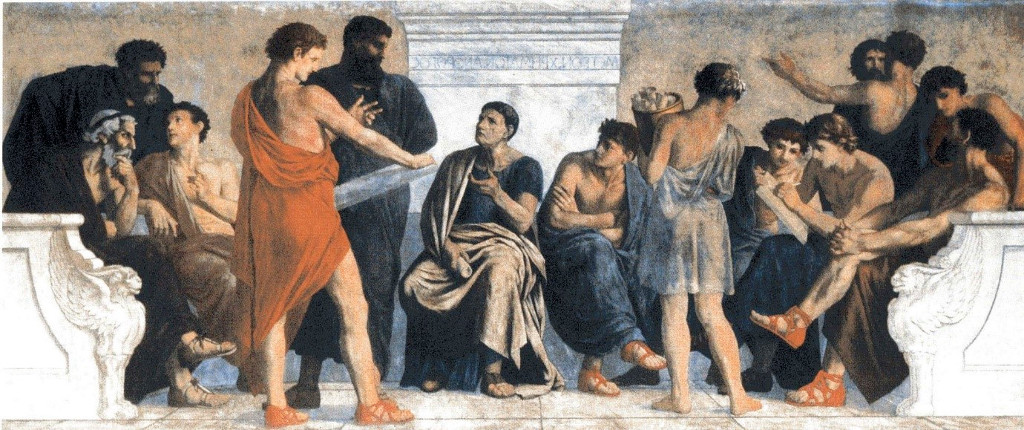
Paideia: The Ideals of Greek Culture, Volume I: Archaic Greece: The Mind of Athens by Werner Wilhelm Jaeger, Gilbert Highet (Translator)
The Paideia Proposal: An Educational Manifesto.by Mortimer J. Adler. Macmillan.
The Passion of the Western Mind: Understanding the Ideas That Have Shaped Our World View: Author: Richard Tarnas: Edition: reprint: Publisher: Ballantine, 1993:
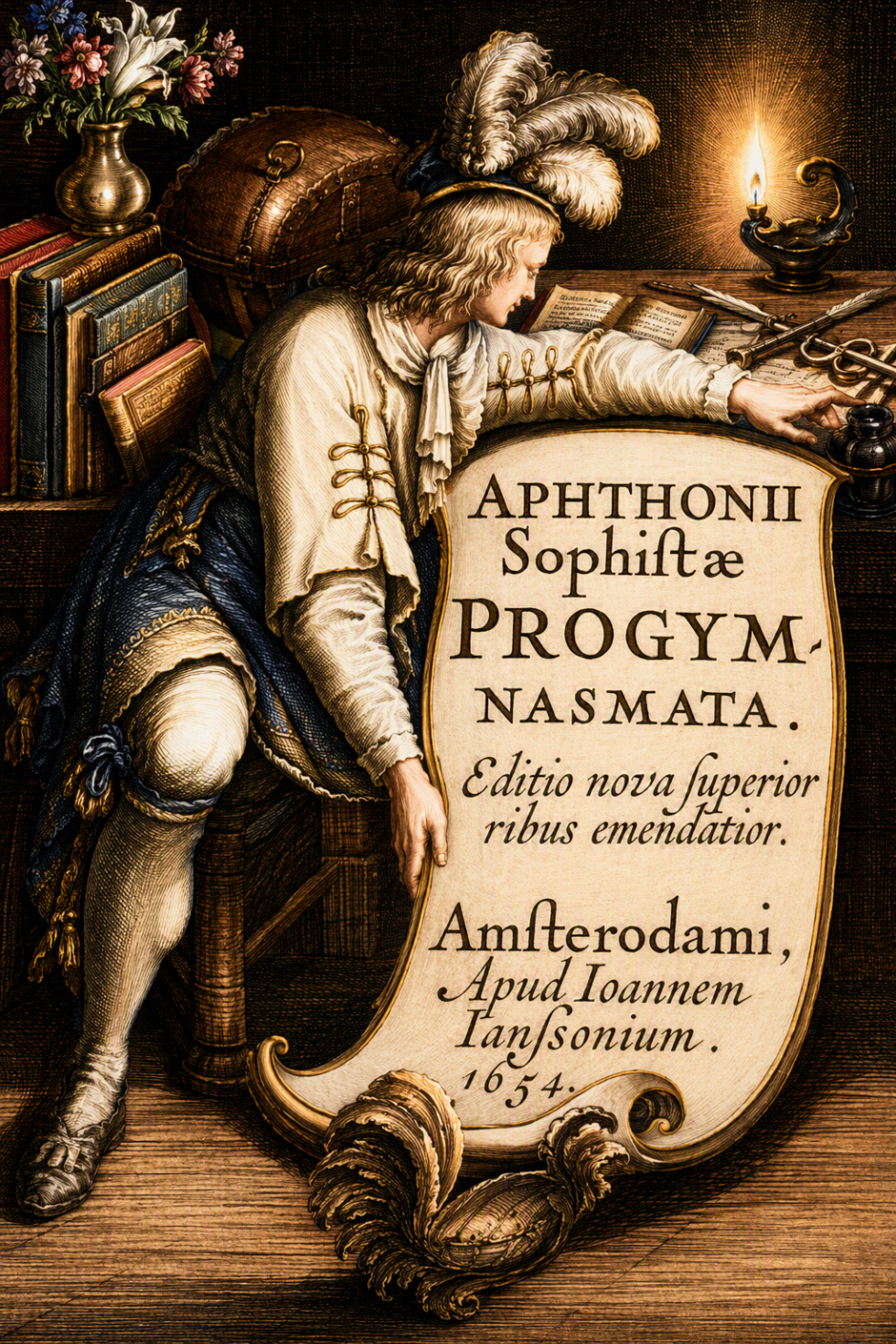 It’s common today to equate rhetoric with the ability to sustain a coherent oral argument. Within contemporary education, particularly as part of higher education certificates, students are routinely expected to articulate and defend a position on a given topic through reasoned and persuasive discourse and, to varying degrees, they are schooled in the techniques necessary to accomplish this task. Yet, such a conception of rhetoric is certainly too simplistic.